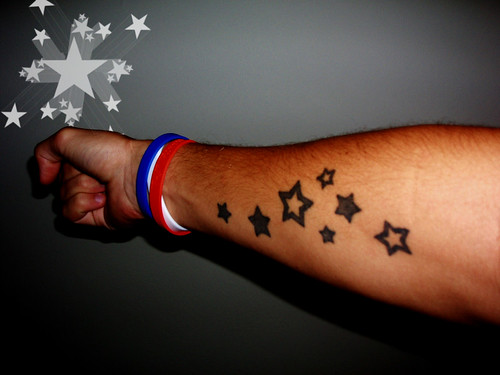
I sincerely wish The Little Medic all the best.
Showing posts with label staff. Show all posts
Showing posts with label staff. Show all posts
Friday, 29 January 2010


Monday, 21 December 2009
Two things that made me smile today
The sight of two of our recovery nurses - one Iranian, one Australian - laughing and dancing arm-in-arm outside as the snow came down.
The fact that Rage Against the Machine are Christmas number one. Power to the people!
The fact that Rage Against the Machine are Christmas number one. Power to the people!
Thursday, 17 December 2009
Raising doctors, the "beta" version

I've just read this brilliant post by Dr Edwin Leap MD. It's the text of a lecture he gave to new doctors starting at his hospital in America. It's more about life in general than it is about medicine. It's long, but it's well worth the read so, give yourself ten minutes, make yourself a nice hot cup of tea, sit back and enjoy his words.
Wednesday, 16 December 2009
Who is a doctor?

Beep Beep… Beep Beep…
My mobile phone shrills and I casually reach over and pick it up to read the incoming text message.
You have an appointment with Dr Kavelidis at
I furrow my brow in confusion. I haven’t made an appointment with my G.P. in fact I haven’t needed to see him in over a year. Besides, I don’t have a clue who “Dr Kavelidis” is, perhaps he’s a new G.P. at the practice. But it still doesn’t make sense I’m sure the GPs at my surgery are busy enough without having to randomly text people on their practice lists to trawl for business. Was this some sort of new QOF thing? Seems unlikely, I’m a healthy young man. Maybe FashionGirl has the answer.
“Darling,” I say and she looks up at me from the magazine that she’s engrossed in. “Did you make me an appointment at the doctors? I’ve just had a text telling me I’ve got an appointment in a couple of days and I never made one.”
She shakes her head at me and says, “No, I didn’t. Let me see that.” She has a look at my phone and says, “It’s odd isn’t it? Especially as there’s no “from” number.”
None the wiser, I delete the message and continue watching the telly. Last time I went to the GP, I did get a reminder text beforehand, so I assumed there’s been a mix up and I’ve go the text by mistake.
Two hours later, it hits me. I do have an appointment on Thursday, but not with the doctor, with the dentist.
I go over to the fridge where I’ve stuck the appointment card and have a look at the names. Sure enough Dr. Kavelidis’ name is on the card, just below "Dr. Chang" and just above, ironically enough, “Dr Anderson.”
So, it does beg the question, “Are dentists ‘doctors?’” On this evidence, apparently they are. It just seems a bit odd to me. Dentistry is incredibly competitive to get into. Like medicine, you need straight As at A-level and then you have to spend five years studying at dental school before you’ve earned the right to call yourself a “dentist.” So why on earth, after all that, would you want to call yourself “doctor”?
It’s not just dentists that are “doctors.” Apparently, these days psychologists are “doctors,” chiropractors are “doctors”, and even nutritionists are “doctors.”
Slag me off if you want, but I spent five years at doctor school to earn the right to call myself “doctor” when I treat patients and I find it rather annoying (and inappropriate) that people with no medical qualifications get to call themselves “doctor” when treating patients.
I know there’s a feeling in the modern NHS that “anyone can do a doctor’s job,” but it’s simply not true. The way I see it, if you think you can be a real doctor, go to medical school and graduate. That way, you’ll see for yourself how “easy” it is.
Now, I totally agree that a PhD is hardly a walk in the park either, and neither is a dentistry degree and I can see that people who’ve worked hard for years at these should have a title to show their achievement.
The solution, I think is to use a system like the do in the
Dr. Michael Anderson MD
I like the sound of that.
Tuesday, 15 December 2009
In which we save money for the NHS

I’m on a morning ward round in the Intensive Care Unit and we’re discussing a patient I’d admitted the day before. Mrs Patel is a lady in her sixties with really bad respiratory failure due to a particularly nasty pneumonia. The previous afternoon I thought that if we gave her non-invasive ventilation (NIV) and adequate intravenous fluids, she may just turn the corner and start to get better.
Unfortunately, I was wrong. She continued to deteriorate and quite soon after she arrives on the ICU, her oxygen levels were still dangerously low despite the NIV so in order to prevent her from dying then and there I had to put her into a medically-induced coma, intubate and put her on a ventilator.
So there I was the next day, recalling this story to the ICU consultant, SHO, ward sister and staff nurse. We look at her blood test results, ABGs, chest X-rays etc… and it’s apparent to all of us that whilst this lady will probably get better, it’s going to take a while and she will need to stay on the ventilator for at least a couple of days.
I turn to Richard, the SHO, and say “Could you change her sedation to midazolam & morphine.”
“Sure,” he says as he picks up the drug chart. He crosses off the propofol & alfentanil and writes up what I requested.
(Basically I’ve asked him to change the drugs that are keeping Mrs Patel in a coma. Propofol & alfentanil are shorter acting, but much more expensive. Because we were going to keep her in a coma for a few days, I changed to the longer-acting but much cheaper midazolam & morphine.)
After scrawling the new prescription (it’s so true what they say about doctor’s handwriting) Richard says, “It won’t make any difference, you know.”
I raise an eyebrow. “What do you mean?”
“I mean, it doesn’t matter how much money we save by doing stuff like this, they’re still going to cut our pay.”
“True enough,” I concede.
“Well, if the other lot get in, they’ll dock our pay even more!” pipes up Julie, the ICU ward sister
“Could we please save the politics for the coffee room,” comes the irritated voice of our consultant. “Now, could someone find the result of this woman’s most recent ECHO?”
Suitably chided, we get back on with the job in hand.
Wednesday, 21 October 2009
In which I embarrass myself
It was Friday and once again, our intensive care unit was overfull. We didn’t physically have enough space to accommodate all the people in the hospital who need to be on ventilators. The short-term solution for this common problem was to use the ventilators in the theatre recovery area and to nurse our patients there. This arrangement cannot last too long though as we don’t have enough nurses to properly look after the extra patients and the theatre recovery ventilators are needed for, well, for theatre recovery.
A more permanent solution is to discharge patients from the intensive care unit (ICU) to make space for the extra patients. If they are well enough, sometimes patients can go to the ward, but on Friday we really didn’t have anyone in that position. Our only option was to transfer one of our patients to another ICU in a different hospital where they did happen to have some space.
Obviously it’s unfair and unsafe for paramedics to transport these critically ill and unstable patients by themselves, so one what happens is that one of the intensive care doctors and one of the ICU nurses travel with these patients in the ambulance to look after them during the journey, and also to hand over the details of their care to the doctors and nurses in the receiving hospital.
And so it is that I find myself in the back of an ambulance taking one of our patients to another hospital.
Anyone who’s ever taken a ride in the back of an ambulance will tell you that the windows are obscured so you can’t see out. Usually I’m not susceptible to travel sickness, but this day was different. We had the heating up to stop our patient getting cold, the ambulance rocked rolled as we went round corners. I hadn’t been feeling well most of the day, I was tired from being on call the day before and hadn’t eaten very much because I had an upset belly.
It was the speed bumps that really did it for me. Andy, the nurse who was travelling with me said, “You’re being unusually quiet today, Michael.”
I looked at him, but couldn’t seem to focus properly. His features swam before my eyes and I knew then that I was going to spew.
“I feel horrific,” I mumbled. “I’m going to be sick”
He raised an eyebrow. “Really?”
I could only nod because my mouth was filling with saliva and I was holding my breath in an attempt to delay the inevitable long enough to grab a sick bowl.
“Here, take this” said Andy as he quickly pulled a cardboard sick bowl from the pile in which it was stacked.
I accepted it gratefully and promptly vomited into it.
“There he blows!” came the amused voice of the paramedic in the front seat as up came the remnant of my cornflakes and the cup of coffee that I’d had just before leaving. But it didn’t stop there, I spent the next quarter of an hour retching bile as the ambulance zoomed through the city with its blue lights on and the siren going. I hadn’t felt so miserable for ages.
I had never felt so grateful to see another hospital as I did when we pulled up outside the A&E of the receiving hospital and I was able to get out into the fresh air. Our patient was absolutely fine though and on the inter-hospital transfer paper work I wrote “Uneventful transfer” in the comments section and, of course, I made Andy promise not to breathe a word about this to anyone else in the ICU.
A more permanent solution is to discharge patients from the intensive care unit (ICU) to make space for the extra patients. If they are well enough, sometimes patients can go to the ward, but on Friday we really didn’t have anyone in that position. Our only option was to transfer one of our patients to another ICU in a different hospital where they did happen to have some space.
Obviously it’s unfair and unsafe for paramedics to transport these critically ill and unstable patients by themselves, so one what happens is that one of the intensive care doctors and one of the ICU nurses travel with these patients in the ambulance to look after them during the journey, and also to hand over the details of their care to the doctors and nurses in the receiving hospital.
And so it is that I find myself in the back of an ambulance taking one of our patients to another hospital.
Anyone who’s ever taken a ride in the back of an ambulance will tell you that the windows are obscured so you can’t see out. Usually I’m not susceptible to travel sickness, but this day was different. We had the heating up to stop our patient getting cold, the ambulance rocked rolled as we went round corners. I hadn’t been feeling well most of the day, I was tired from being on call the day before and hadn’t eaten very much because I had an upset belly.
It was the speed bumps that really did it for me. Andy, the nurse who was travelling with me said, “You’re being unusually quiet today, Michael.”
I looked at him, but couldn’t seem to focus properly. His features swam before my eyes and I knew then that I was going to spew.
“I feel horrific,” I mumbled. “I’m going to be sick”
He raised an eyebrow. “Really?”
I could only nod because my mouth was filling with saliva and I was holding my breath in an attempt to delay the inevitable long enough to grab a sick bowl.
“Here, take this” said Andy as he quickly pulled a cardboard sick bowl from the pile in which it was stacked.
I accepted it gratefully and promptly vomited into it.
“There he blows!” came the amused voice of the paramedic in the front seat as up came the remnant of my cornflakes and the cup of coffee that I’d had just before leaving. But it didn’t stop there, I spent the next quarter of an hour retching bile as the ambulance zoomed through the city with its blue lights on and the siren going. I hadn’t felt so miserable for ages.
I had never felt so grateful to see another hospital as I did when we pulled up outside the A&E of the receiving hospital and I was able to get out into the fresh air. Our patient was absolutely fine though and on the inter-hospital transfer paper work I wrote “Uneventful transfer” in the comments section and, of course, I made Andy promise not to breathe a word about this to anyone else in the ICU.
Friday, 16 October 2009
Now I Know

I’ve not blogged much lately because my current job is really hardcore and I haven’t had that much time and I didn’t want to spend the free time I have had blogging because it reminds me of work.
In August, when I started working in Intensive Care the lead consultant, Dr. Cullen, asked me whether or not I wanted to do Intensive Care as a future career. At the time I really had no idea, and told him as much. You see, to us anaesthetists, Intensive Care work is a bit like Marmite in that it we either love it or hate it.
I worked in ICU in my first year of anaesthetic training, but at that time, I felt I didn’t really get a feeling of whether it would be something I’d like to pursue further down the line. I felt that I didn’t know enough stuff to be really useful and I didn’t know enough to actually make a real difference to the patients that I was helping to look after.
I’m now coming to the end of my current attachment in ICU and yesterday Dr. Cullen asked me again if I would consider intensive care as a career. This time I had an answer for him – no.
There are things that I really like about working here, I like it when we’re given a rapidly deteriorating patient, and I can stop their demise and (hopefully) put them on the road towards recovery. I actually like going round the wards and being able to be useful to other doctors who are struggling to look after their ill patients. I like the fact that I can actually do the majority of medical procedures, I’ve done dozens of central lines, arterial lines, intubations, chest drains, difficult venflons etc… etc… and these things no longer hold any mystery or worry for me. I like the fact that the ICU nurses are so switched-on and the fact that there are so many of them means that they can help us doctors out more which means I get to concentrate more on actually trying to get our patients better.
ICU is no land of milk and honey though. There are lots of things I really don’t like. A while ago, I wrote about why doctors get stressed and about some of the ways they cope. I said that simply being around unwell people is uncomfortable for people who have dedicated their lives to trying to make people well. I’m finding this really true of myself. Even when everyone is totally stable and there’s not much happening, I find just being on the intensive care unit stressful. The constant beeps, the almost continual alarms of the infusion pumps, monitors and ventilators, the fact that I know that things can, and often do, go tits up at any moment, all this things conspire to put my blood pressure up.
Our patients are all teetering on the brink of death. Actually, it’s more accurate to say that they’re well past the brink and with our machines we are desperately trying to push them back ONTO the brink so they have a fighting chance of living. This means that one of our patients will frequently drop their oxygen levels or blood pressure to a dangerously low level. They often hallucinate and try to pull out the very tubes that are stopping them dying. While the nurses are very good at sorting these things out, often they’ll need help just to stop the patient from expiring and it’s me that has to go and sort these problems out. Often I feel I’m fighting a pitched battle against the very people I’m meant to be helping. I find it frustrating that I can’t talk to my patients and that they’re often on the ICU for so long with only very tiny improvements to their health each day.
And then there’s the relatives. Seeing your husband/son/mother/grandpa/sister/friend unconscious and hooked up to all our machines must feel horrible. I can’t even imagine how I’d feel if I saw my mother lying their as one of our patients, I shudder at the thought. We try our best to explain what we are doing but I find having these conversations difficult simply because I don’t know what’s going to happen to their loved one. The two commonest questions a relative asks are “Is my loved one getting better?” and “Is my loved one going to die?” And the trouble is, often I simply don’t know if they’re going to live or die and, unlike when I was a physician, often I don’t even have a handle on how likely survival or death is. The uncertainty is often really hard for relatives to understand and deal with. But what I think is even more difficult is the timescale. As I already alluded to, patients stay unconscious with only very slight changes in their condition for days or weeks. We as doctors can see the subtle changes in their inotrope requirement, ventilatory demands etc… but basically, from the outside they look exactly the same. (Actually, as time passes, ICU patients look aesthetically worse as they swell up with fluid and accumulate puncture scars from all the tubes we keep sticking into them.) While we try to explain what’s happening, the seeming lack of progress after such long periods of time is often really distressing because relatives are sort of suspended in a seemingly unending, hellish limbo. Seeing relatives upset in turn upsets me because I too want their loved one to get better quickly, but it’s rarely possible and it leaves me wishing I could do more when I just can’t.
Dealing with other doctors can be wearing as well. There’s a constant trickle of calls for little things like venflons, lumbar punctures, central lines etc…from acopic ward doctors but that stuff doesn’t really bother me. I use my discretion. I help out if the request is reasonable and I’m free and able, if they’re just taking the piss and trying to get me to do their job for them, I have no qualms about telling them where to go. No, there are two things that really get me. Firstly, some doctors seem to have the belief that every unwell person should be looked after by the intensive care team. This really isn’t the case. Sick patients often don’t need Intensive Care, but they need the ward doctors to pay close attention to their condition and give appropriate treatments and sometimes, it’s hard to get ward doctors to understand this. Secondly, there are the group of patients who have been blatantly mismanaged on the wards and then I get a call to see them and am somehow expected to perform miracles. This frustrates me no end too.
And finally, there are the times where it really does all go wrong. There’s the fast bleeps, there’s the trauma calls and there’s the cardiac arrest calls. On average, I go to two or three of these every shift (my record is eleven). These are the situations where people are literally at (or through) death’s door. Sometimes, there’s not much for me to do at these calls, but sometimes there is. Often they’re just a horrible disaster and often the patient dies, sometimes in a more painful and disgusting way than you ever thought was possible.
So all in all, I’m working hard in Intensive Care, but I’d hate to do this forever. There’s too much drama, too much stress, too much politics, and too much frustration. If I had to do this forever, I think I’d end up worrying myself into an early grave, there are far easier ways of earning a living. I don’t think it’s any coincidence that two weeks ago, I found my first grey hair.
In August, when I started working in Intensive Care the lead consultant, Dr. Cullen, asked me whether or not I wanted to do Intensive Care as a future career. At the time I really had no idea, and told him as much. You see, to us anaesthetists, Intensive Care work is a bit like Marmite in that it we either love it or hate it.
I worked in ICU in my first year of anaesthetic training, but at that time, I felt I didn’t really get a feeling of whether it would be something I’d like to pursue further down the line. I felt that I didn’t know enough stuff to be really useful and I didn’t know enough to actually make a real difference to the patients that I was helping to look after.
I’m now coming to the end of my current attachment in ICU and yesterday Dr. Cullen asked me again if I would consider intensive care as a career. This time I had an answer for him – no.
There are things that I really like about working here, I like it when we’re given a rapidly deteriorating patient, and I can stop their demise and (hopefully) put them on the road towards recovery. I actually like going round the wards and being able to be useful to other doctors who are struggling to look after their ill patients. I like the fact that I can actually do the majority of medical procedures, I’ve done dozens of central lines, arterial lines, intubations, chest drains, difficult venflons etc… etc… and these things no longer hold any mystery or worry for me. I like the fact that the ICU nurses are so switched-on and the fact that there are so many of them means that they can help us doctors out more which means I get to concentrate more on actually trying to get our patients better.
ICU is no land of milk and honey though. There are lots of things I really don’t like. A while ago, I wrote about why doctors get stressed and about some of the ways they cope. I said that simply being around unwell people is uncomfortable for people who have dedicated their lives to trying to make people well. I’m finding this really true of myself. Even when everyone is totally stable and there’s not much happening, I find just being on the intensive care unit stressful. The constant beeps, the almost continual alarms of the infusion pumps, monitors and ventilators, the fact that I know that things can, and often do, go tits up at any moment, all this things conspire to put my blood pressure up.
Our patients are all teetering on the brink of death. Actually, it’s more accurate to say that they’re well past the brink and with our machines we are desperately trying to push them back ONTO the brink so they have a fighting chance of living. This means that one of our patients will frequently drop their oxygen levels or blood pressure to a dangerously low level. They often hallucinate and try to pull out the very tubes that are stopping them dying. While the nurses are very good at sorting these things out, often they’ll need help just to stop the patient from expiring and it’s me that has to go and sort these problems out. Often I feel I’m fighting a pitched battle against the very people I’m meant to be helping. I find it frustrating that I can’t talk to my patients and that they’re often on the ICU for so long with only very tiny improvements to their health each day.
And then there’s the relatives. Seeing your husband/son/mother/grandpa/sister/friend unconscious and hooked up to all our machines must feel horrible. I can’t even imagine how I’d feel if I saw my mother lying their as one of our patients, I shudder at the thought. We try our best to explain what we are doing but I find having these conversations difficult simply because I don’t know what’s going to happen to their loved one. The two commonest questions a relative asks are “Is my loved one getting better?” and “Is my loved one going to die?” And the trouble is, often I simply don’t know if they’re going to live or die and, unlike when I was a physician, often I don’t even have a handle on how likely survival or death is. The uncertainty is often really hard for relatives to understand and deal with. But what I think is even more difficult is the timescale. As I already alluded to, patients stay unconscious with only very slight changes in their condition for days or weeks. We as doctors can see the subtle changes in their inotrope requirement, ventilatory demands etc… but basically, from the outside they look exactly the same. (Actually, as time passes, ICU patients look aesthetically worse as they swell up with fluid and accumulate puncture scars from all the tubes we keep sticking into them.) While we try to explain what’s happening, the seeming lack of progress after such long periods of time is often really distressing because relatives are sort of suspended in a seemingly unending, hellish limbo. Seeing relatives upset in turn upsets me because I too want their loved one to get better quickly, but it’s rarely possible and it leaves me wishing I could do more when I just can’t.
Dealing with other doctors can be wearing as well. There’s a constant trickle of calls for little things like venflons, lumbar punctures, central lines etc…from acopic ward doctors but that stuff doesn’t really bother me. I use my discretion. I help out if the request is reasonable and I’m free and able, if they’re just taking the piss and trying to get me to do their job for them, I have no qualms about telling them where to go. No, there are two things that really get me. Firstly, some doctors seem to have the belief that every unwell person should be looked after by the intensive care team. This really isn’t the case. Sick patients often don’t need Intensive Care, but they need the ward doctors to pay close attention to their condition and give appropriate treatments and sometimes, it’s hard to get ward doctors to understand this. Secondly, there are the group of patients who have been blatantly mismanaged on the wards and then I get a call to see them and am somehow expected to perform miracles. This frustrates me no end too.
And finally, there are the times where it really does all go wrong. There’s the fast bleeps, there’s the trauma calls and there’s the cardiac arrest calls. On average, I go to two or three of these every shift (my record is eleven). These are the situations where people are literally at (or through) death’s door. Sometimes, there’s not much for me to do at these calls, but sometimes there is. Often they’re just a horrible disaster and often the patient dies, sometimes in a more painful and disgusting way than you ever thought was possible.
So all in all, I’m working hard in Intensive Care, but I’d hate to do this forever. There’s too much drama, too much stress, too much politics, and too much frustration. If I had to do this forever, I think I’d end up worrying myself into an early grave, there are far easier ways of earning a living. I don’t think it’s any coincidence that two weeks ago, I found my first grey hair.
Wednesday, 23 September 2009
Lest we forget

“Respect your elders.” It’s a phrase that just about every living person would have heard at some point during their childhood. The sentiment being that those who are older than us have more experience in the ways of the world and that their advice and opinions have a deeper grounding than us and our peers. In many cultures, this is taken further. Stories of our ancestors and forefathers are passed down from generation to generation with the hope that the young will gain knowledge from those that have gone before.
It seems to me that the modern way in different. We don’t respect our fathers, we don’t respect their experiences, and we don’t respect their knowledge. We don’t overthrow them or castigate them. We simply forget them.
I can point to the Credit Crunch of 2007 and the ensuing worldwide recession as a prime example. It’s not as if recessions or market bubbles are a new phenomenon. It’s not as if the factors leading up to a recession are deeply buried secrets. All the documents, all the policies and legislation from the 1920s and even 1980s are all fully out in the open in the public domain. We could all have read all about it if we wanted to – but we didn’t. We didn’t know the history, we didn’t care about the history, we believed that “That was all yonks ago, things have changed now and that disaster couldn’t possibly happen in the modern era.”
We were wrong. It could happen again and it did happen again.
But that what we modern westerners do, we think often about the present and sometimes about the future, but never about the past. Our fathers have always been dead to us. We simply forget them.
It’s happening again. As you sit reading these words, we are in the midst of a global influenza pandemic. Again, 'flu pandemics are not a new thing. We’ve been through them before. Our fathers died in bygone pandemics and those who survived documented what happened so that future generations could learn. We know how pandemics behave and what’s great about 2009 is that we don’t have to go rummaging around old musty libraries to find out. The information is at our fingertips, merely microseconds away. It’s not even in the dim and distant past. There are thousands of people alive today who lived through the last pandemic.
It seems to me that the modern way in different. We don’t respect our fathers, we don’t respect their experiences, and we don’t respect their knowledge. We don’t overthrow them or castigate them. We simply forget them.
I can point to the Credit Crunch of 2007 and the ensuing worldwide recession as a prime example. It’s not as if recessions or market bubbles are a new phenomenon. It’s not as if the factors leading up to a recession are deeply buried secrets. All the documents, all the policies and legislation from the 1920s and even 1980s are all fully out in the open in the public domain. We could all have read all about it if we wanted to – but we didn’t. We didn’t know the history, we didn’t care about the history, we believed that “That was all yonks ago, things have changed now and that disaster couldn’t possibly happen in the modern era.”
We were wrong. It could happen again and it did happen again.
But that what we modern westerners do, we think often about the present and sometimes about the future, but never about the past. Our fathers have always been dead to us. We simply forget them.
It’s happening again. As you sit reading these words, we are in the midst of a global influenza pandemic. Again, 'flu pandemics are not a new thing. We’ve been through them before. Our fathers died in bygone pandemics and those who survived documented what happened so that future generations could learn. We know how pandemics behave and what’s great about 2009 is that we don’t have to go rummaging around old musty libraries to find out. The information is at our fingertips, merely microseconds away. It’s not even in the dim and distant past. There are thousands of people alive today who lived through the last pandemic.
The pandemic hits in the summertime with a large increase in the number of cases. Attempts to halt the spread of the disease fail for a multitude of reasons but at the height of summer, the number of people with the illness falls as people go off on holiday. When they and their children return in the autumn, the disease comes back with a vengeance killing more and more as autumn rolls into winter. Can you guess what’s happening with the swine flu pandemic now autumn is here and schools have resumed?
I guess that human flu has been around as long as humanity itself and in some ways it’s surprising that in this day and age we have remarkably few weapons at our disposal to fight it. Unlike their antibiotic cousins, anti-viral agents such as oseltamivir (Tamiflu) and zanamivir (Relenza) are actually pretty ineffective at treating the flu so, if we get the disease we pretty much have to rely on our own immune systems to fight the disease. History tells us that for a lot of us, our own immune system won’t be up to the task.
So what can we do about it?
As far as I can see, our medical and political leaders are doing what they can. Trust me, I’m no apologist for Liam Donaldson or Gordon Brown but they have at least tried to get the handwashing message out and the antivirals to the right people. More importantly, they have done the best they can to keep the worried well from swamping GP and hospital services. They’ve tried not to panic the population as a whole but, as I say there’s no decent treatment for flu and there’s not much we can actually do for people with flu apart from try and support them as best we can. It seems to me that our best hope of avoiding the deaths that we’ve seen in previous pandemics lies with a swine flu vaccine.
And yet… and yet…
Speaking to my colleagues, it seems that for a variety of reasons, many won’t be taking the vaccine. Polls among the profession show a similar story. We’ve had UK medical blogger Dr Crippen writing in the national press that the vaccination programme is a load of codswallop and that he certainly won’t be having it. There seems to be an ingrained resistance to this simple public health measure and it seems churlish for us doctors as a profession to expect other people to have the vaccine if we won’t have it ourselves.
Personally, I believe that when the first nurse or junior doctor dies from this disease, it will change the attitude of many of my peers, but it’s a shame that it will actually take the death of a colleague for people to start to pay attention to what the past has told us.
But, like I say, this is the modern way. We only think about the present and we forget the lessons that our fathers try to teach us.
Wednesday, 24 June 2009
It's nice to have an audience
It’s lovely outside isn’t it? I think we’ve already had more sunny days so far this summer than we did in the whole of last summer. Or the summer before, come to think of it. I’ve been away on holiday and I have to say that it’s been a bit of a struggle to motivate myself and to get back into “work mode” this week.
I’m coming up to the end of my second year of anaesthetics and I must say that my initial concerns about working in the specialty have proved unfounded. Every day I’m at work, I find something new that makes me happy.
For example, today I was working with Dr Burrows for the first time. Dr Burrows has a reputation for being a curmudgeon. He has very high standards and if you happen to say or do anything dumb in his presence, he’ll certainly let you know about it. I guess you could say that he’s quite old school in that way. Rumours say that he’s been stopped from teaching medical students because he kept making them cry.
Anyway, this morning’s patient was in for major surgery and required invasive monitoring. Dr Burrows asked me which parts did I want to do and I immediately said “The central line and the epidural” and went off to get scrubbed up. I’ve put in a fair few central lines and epidurals in the last couple of years and I’m at the stage where I feel just about confident that I can get them into most people.
I set everything up and under Dr Burrows’ punishing stare, I go about placing the epidural and central line. They both go in beautifully first time with no mess and no fussing. Later on Martin, the ODP, says to me “Dr Burrows was quite impressed with you, you know. He said that you were very slick and very professional.”
I smile to myself before replying, “It’s a shame they don’t always go in that easily. You watch, the next one I do will probably be a disaster, but it’s nice to know that sometimes, things go really smoothly.”
And when you do things really well, it’s nice to have an audience.
Thursday, 21 May 2009
Caught unaware
Another afternoon on call and I’m at another cardiac arrest call. I’ve intubated the nonagenarian in question and am standing, giving the AMBU-bag an occasional squeeze whilst waiting for the medical reg to decide that this poor chap’s had enough and we should cease CPR.
Friday, 15 May 2009
Dear Nurse
Dear Nurse,
We are not going to take this old man to the CT scanner. You asked me why and I told you the reasons. He is a 91-year-old nursing home resident. He has a GCS of 3, his right pupil is fixed an dilated, his blood pressure is 212/95 and he has a heart rate of 54 bpm. The paramedics say that he had a dense left hemiparesis when they arrived and now he is unconscious.
I can see that you have a smart navy blue uniform and your badge says that you are the "Acute Stroke Lead Co-ordinator" or something, you are obviously a very important person. You can threaten us with clinical incident forms all you like, but I totally agree with the med reg on this one, going to the scanner would be a pointless waste of time, money and effort. There's no need to quote the NICE guidelines at me, I know what they say, but sometimes you have to ignore the guidelines.
Unfortunately, this man is going to die - CT or no CT - and what we should be doing right now is trying to make his last few hours as comfortable as possible. He needs care and to be allowed to pass away with dignity. He does not need a CT scan.
regards,
Dr M. Anderson
We are not going to take this old man to the CT scanner. You asked me why and I told you the reasons. He is a 91-year-old nursing home resident. He has a GCS of 3, his right pupil is fixed an dilated, his blood pressure is 212/95 and he has a heart rate of 54 bpm. The paramedics say that he had a dense left hemiparesis when they arrived and now he is unconscious.
I can see that you have a smart navy blue uniform and your badge says that you are the "Acute Stroke Lead Co-ordinator" or something, you are obviously a very important person. You can threaten us with clinical incident forms all you like, but I totally agree with the med reg on this one, going to the scanner would be a pointless waste of time, money and effort. There's no need to quote the NICE guidelines at me, I know what they say, but sometimes you have to ignore the guidelines.
Unfortunately, this man is going to die - CT or no CT - and what we should be doing right now is trying to make his last few hours as comfortable as possible. He needs care and to be allowed to pass away with dignity. He does not need a CT scan.
regards,
Dr M. Anderson
Wednesday, 6 May 2009
I should have got it done years ago
Walking down the corridor I spy Andy, one of the surgical SHOs who gives me a wave. He’s just come back from a holiday in orange tanned.
“Hey mate, how was the trip?” I enquire
“Absolutely brilliant,” comes his chirpy response. “Seven days with nothing to do apart from lounge around and drink beer.”
“Nice one, I’m almost jealous.”
“You ought to be.”
“And you seem to be doing a reasonable impression of Dave Dickinson at the moment…”
“Hey… don’t you start knocking our Dave! Anyway the tan’s not the only thing I got out there”
“Oh really? What else did you get? The clap? I’ve told you about this before…”
“Cheeky twat!” and he punches me on the arm. “No, I was talking about this…” And he gives me a conspirational look and rolls up his shirt sleeve to reveal a rather large tattoo on his right arm.
“Oh, you got it in the end.”
“Yeah, what do you think?” I study the design for a moment. It’s actually rather a good one. Admittedly, it doesn’t really go with the cuff linked shirt that he’s wearing, but with a different outfit I reckon it’d look really good.
“I like it,” I conclude. “It’s a bit bigger than I thought you were going to go for, but I think it looks really good.”
“Yeah, I thought there’s no point getting one unless it’s a big one and I really love it! I should have got it done years ago.”
“Well, you did keep banging on about it for ages, so at least I don’t have to listen to that anymore. But honestly, it looks good. I’ve got to get back to ITU though, I need to put a central line in before the patient goes to the CT scanner at
“Yeah, see you mate,” replies Andy and off he flounced back towards the surgical wards.
Thursday, 30 April 2009
It's that time of year again
We had one of our regular teaching sessions at TheBigTeachingHospitalDownTheRoad today. I actually quite like these afternoons, it gives us a break from the day-to-day clinical work and also allows us to meet up with junior anaesthetists from other hospitals in the region and it gives us a chance to swap stories and just have a good old-fashioned gossip.
Monday, 27 April 2009
Blood on the dancefloor, part 2
This is a continuation of this post.
A bougie is basically a bendy stick, and when using one to incubate a person, you’re aiming to feel the stick running across the rings of cartilage in the patient’s windpipe – a bit like a child running a stick along a wooden fence. As I pushed the bougie down into this man’s body, I didn’t feel that sensation at all.
When I was putting the bougie in, my hands must have shifted slightly. Either that or the swelling and bleeding has got worse, because as I try to look down the man’s throat, I can no longer see what I thought I could see initially. It just looks like a bloody mess and I wonder if I ever really saw anything in the first place or if it was just my brain playing tricks on me and making me see what I wanted to see.
I figure that taking the bougie out and trying again is probably not be the best thing to do, but I did remember something that Dr Harrison told me when I was first learning how to use a bougie. ‘The trachea isn’t very long, even in the tallest of men. If you keep pushing the bougie down the trachea, you’ll get to a point when you can push it no further. If you push I down the oesophagus, you can pretty much push it all the way in.’
One of the things that I’ve noticed when dealing with acutely critically ill people like this is that as soon as the patient is intubated, everyone calms down a couple of notches. It’s almost as if the team breathes a collective sigh of relief. I think this mainly because when you induce anaesthesia and paralyse the patient, obviously they stop screaming and thrashing around which means that it suddenly becomes much easier for everyone else to do what the have to do. That could be that cutting off clothing, listening to the chest, feeling a pulse, palpating the abdomen, phoning radiology or simply taking in information and thinking about what the next steps should be. Whatever it is, it’s easier to do when you don’t have a screaming, thrashing patient in front of you.
Carl needs a CT scan of his head to see if he’s bleeding into his brain and thus needs urgent neurosurgery. Someone gets on the phone to the radiologist and the radiographers go off to warm up the CT scanner.
Major trauma really is time-critical. The sooner patient receives treatment, the better their outcome is. If you have an interest in trauma, phrases like “the golden hour” and “the platinum 10 minutes” will be familiar. In situations like this, the clock really is ticking and every minute unnecessarily wasted is potentially detrimental to the patient. The thing is, it’s so easy to waste time. It’s really tempting to “stay and play” in the resus room. You can put in arterial lines and central lines, set up infusers, warmers, splints etc… etc… All of these things take time, but these things may not be necessary or even helpful to the particular patient in front of you. You can spend lots of time trying to “do every thing by the book,” but lose sight of the fact that the whole point of “the book” is to identify the patient’s injuries and get them treated as quickly as is humanly possible.
Monday, 13 April 2009
Blood on the dancefloor
The last patient on the emergency NCEPOD list is sitting in recovery after his operation. He’s drowsy, but comfortable and I’m chatting to Sara, one of the nurses when my pager goes off.
“Trauma call – A&E resus immediately please… Trauma call – A&E resus immediately please… Trauma call – A&E resus immediately please…”
I sigh and roll my eyes at Sara. “Just when you think all the work has been done, something else happens,” I say.
She smiles sympathetically as I turn and make my way out of Main Theatres towards A&E. To be honest, I’d been expecting this. I hadn’t had any trauma calls on my last couple of on-call shifts so, on the balance of averages, I was due one today.
Dealing with major trauma is one of the things that really worries me as a junior anaesthetist. Over the past few months, I’ve been making a big effort to improve my trauma management and get more experience of managing patients with major trauma. One of the things I wanted to achieve by the end of my ST2 year in anaesthetics was to be much more comfortable in situations just like this, and to some extent, I’ve succeeded. If I’d been in this situation a year ago, I’d be absolutely shitting it, but as I round the corner into the A&E resus room, I feel in control of my own emotions.
The first people I see are a couple of police officers looking intently at the scene that was unfolding in front of them. I give them a brief nod and headed into the resus bay.
The scene that greets me is bad. Very bad.
A young man lies on the casualty trolley screaming unintelligibly. He’s trying to trash around and two paramedics are trying their best to prevent him from hurling himself onto the ground. The bloody footprints of the hospital staff have created a perverse mosaic on the floor of the resus room as they desperately try and get control of the situation. A nurse has the man’s left arm locked in his vice-like grip in an attempt to keep it still as the surgeon is trying to shove a cannula into the man’s vein. I glance at the portable obs machine next to the trolley. It’s impassive display reads:
“Trauma call – A&E resus immediately please… Trauma call – A&E resus immediately please… Trauma call – A&E resus immediately please…”
I sigh and roll my eyes at Sara. “Just when you think all the work has been done, something else happens,” I say.
She smiles sympathetically as I turn and make my way out of Main Theatres towards A&E. To be honest, I’d been expecting this. I hadn’t had any trauma calls on my last couple of on-call shifts so, on the balance of averages, I was due one today.
Dealing with major trauma is one of the things that really worries me as a junior anaesthetist. Over the past few months, I’ve been making a big effort to improve my trauma management and get more experience of managing patients with major trauma. One of the things I wanted to achieve by the end of my ST2 year in anaesthetics was to be much more comfortable in situations just like this, and to some extent, I’ve succeeded. If I’d been in this situation a year ago, I’d be absolutely shitting it, but as I round the corner into the A&E resus room, I feel in control of my own emotions.
The first people I see are a couple of police officers looking intently at the scene that was unfolding in front of them. I give them a brief nod and headed into the resus bay.
The scene that greets me is bad. Very bad.
A young man lies on the casualty trolley screaming unintelligibly. He’s trying to trash around and two paramedics are trying their best to prevent him from hurling himself onto the ground. The bloody footprints of the hospital staff have created a perverse mosaic on the floor of the resus room as they desperately try and get control of the situation. A nurse has the man’s left arm locked in his vice-like grip in an attempt to keep it still as the surgeon is trying to shove a cannula into the man’s vein. I glance at the portable obs machine next to the trolley. It’s impassive display reads:
HR: -?-
BP: -?-
O2 Sats: 84%
Like I say, this is very bad.
Ken, the A&E charge nurse is trying to give this man some oxygen, but he screams again and thrashes his head from side to side.
“Are you the anaesthetist?” Ken, asks me.
“Yes, I am” I reply as I scan the bay for a pair of gloves to put on. The only box of gloves I can see contain small gloves, this has been a recurring annoyance throughout my medical career so far. I squeeze my goal-keeper hands into the gloves, quickly connect together an anaesthetic breathing circuit and turn on the oxygen. Ken stands aside as I plant my oxygen mask onto the patients face.
The patient looks horrific. His face is massively swollen to the extent that he cannot open his eyes and I cannot open them for him. The whole of his head is completely covered in blood, he is bleeding from his scalp, his cheek, his nose and appears to be bleeding from somewhere inside his mouth. My fingers keep slipping off his face as I try to hold the mask on to enable him to breath the vital oxygen.
Paradoxically, in the few moments that I’ve been there, I’ve been reassured by the situation. It’s probably not as bad as it looks. The mere fact that he is able to scream and fight means that he is not at the end of the road yet so, while things are undoubtedly very bad, they’re not yet critical. The surgeon has secured IV access and has moved on to examine the man’s torso.
“Can I have some suction?” I say and Ken passes me the Yankeur sucker which I put into this poor guys’ mouth. I suck blood, clots and saliva away from the back of his throat, which enables him to scream even louder.
"What's happened to this guy?" I ask. One of the paramedics starts to tell me the story, but to be honest I'm not taking it in at all. The patient is trying to sit up again and I lose my grip of my oxygen mask, which tumbles onto the floor.
“AAAAAAAARRRRRRGGGGGGGGGHHHHH!!!!!!!” he screams, but I notice that his scream gurgles towards the end as blood re-accumulates in his throat.
“This is fucked,” I state. “He’s got loads of blood in his mouth, he’s not spitting, he’s not swallowing, he’s probably going to aspirate if we leave him like this for much longer – I’m going to intubate this guy.” No one disagrees with me, and I quickly try to formulate a plan of how I’m going to intubate this man without killing him.
“Ken, are you OK to hold the oxygen mask while I draw up some drugs?” He nods to the affirmative and I hand him the mask, peel of my blood-soaked gloves and go to the drugs cupboard. It’s locked.
“Anyone got the drug keys?” I say, but I’m ignored as the patient continues to trash around. “WHO HAS GOT THE DRUG KEYS?” I shout. Sometimes, you have to make yourself heard.
“They’re over here,” comes the voice of Mary, one of the nurses.
“Thank-you” I say as she opens up the cupboard for me. I take out the thiopental and suxamethonium and start to draw the drugs into syringes. This takes a few moments and gives me time to pause for thought. I figure that this situation has the potential to go from serious to critical to fatal very quickly. Taking this into account, I conclude that it’s worth getting as much help as I can muster. I’m going to need to phone a friend.
“Mary, could you please call theatres and ask for one of the ODPs to come down to resus.”
“Certainly,” she says as she heads towards the phone.
“Oh, and Mary, could you also please bleep the ITU reg (my immediate senior) and ask him to come down too.”
I turn my attention back to the patient.
“Thanks Ken,” I say as I take the oxygen mask from him.
I put the Yankeur sucker back into the patients mouth and hoover out more blood. As I do so, he coughs and sends a spray of blood and saliva into my face. I feel the warm fluid trickle down the side of my face and my stomach turns. I make a face at Ken and he gives me a sympathetic look. “At least I had my mouth shut,” I say. Thank God for small mercies.
“Right, everyone; this man needs to go to sleep.” I say loudly. “Ken, can we take his hard collar off, now? And what I’d like is for you to do manual in-line stabilisation [of his neck], when the ODP arrives, she can do cricoid pressure and help me with the intubating equipment and we’ll get some one else to give the drugs.”
“Sure,” comes Ken’s response and he manoeuvres himself so he can comfortably keep the man’s neck as still as possible while Mary and I take off the hard collar.
I put the oxygen mask back on his face and right at that moment, like a cavalry unit, both the ODP and ITU reg arrive.
“I’m going to intubate him,” I tell them.
“What’s his GCS?” asks Ben, the ITU reg.
“Twelve” comes the voice of some bright spark in the bay. I’m pretty sure that his GCS is much less than twelve, but now is not the time to start a debate about it.
I shake my head, “He’s got a mouthful of blood and he’s not spitting or swallowing.”
“Can he maintain his own airway?” asks Ben
“No,” I reply
“OK then, I’ll draw some drugs up.”
“I’ve already got them,” I say. “They’re behind me.”
Ben picks up the drugs and goes round to where the surgeon had secured an intravenous cannula.
“Is everyone ready?” Ben asks. We all affirm we are. “OK, I’m giving the drugs now… Thio is in” the man on the trolley stops trying to fight us and becomes suddenly very limp. “Sux is in” The patient’s muscles ripple under his skin in an uncoordinated dance as the drug works its way round his body and paralyses every muscle as it goes.
I know it’s down to me now. Thanks to us, this man can no longer breathe and I have a small window of time to get a breathing tube into his lungs before he starts to die. The room has gone eerily quiet and I know that all eyes are on me as I pick up the laryngoscope and put it into his mouth. I’m hoping to see his vocal chords. What I’m aiming to do is push the tube between the chords into his lungs. They say that intubation should be a calm, smooth process, but I can immediately tell that this is going to be difficult.
All I can see is a lake of bright red blood. I pick up the Yankeur sucker and try to suck it away. The lake recedes annoyingly slowly, revealing the anatomical structures beneath it. But this doesn’t look like it does in the textbooks. It doesn’t look like any other intubation I’ve seen before. Everything is swollen, everything is red and everything looks sort of… twisted. I can’t see the vocal chords. I can’t see where I’m meant to put the tube. Worse, I can’t see any of the things around the vocal chords that are meant to give you a clue as to where to aim. I can’t see the epiglottis, I can’t see the arytenoids.
“Fucking hell,” I whisper to myself.
“Sats are 92%” comes Mary’s voice.
This man is starting to run out of oxygen and I’m going to have to do something. I pull harder on the laryngoscope handle, hoping to improve my view. The man’s throat is starting to fill with blood again, but I can’t see from where. Just at the limits of my view, I can see something pale and bumpy. I think it’s one of the arytenoids, but I’m not sure. I have a decision to make now. Do I step aside and let Ben see if he can intubate this man or do I try and do it myself, knowing that if I fail, it will be even harder for Ben to succeed? I trust my judgement and pick up the bougie [an intubating aid].
I know it’s down to me now. Thanks to us, this man can no longer breathe and I have a small window of time to get a breathing tube into his lungs before he starts to die. The room has gone eerily quiet and I know that all eyes are on me as I pick up the laryngoscope and put it into his mouth. I’m hoping to see his vocal chords. What I’m aiming to do is push the tube between the chords into his lungs. They say that intubation should be a calm, smooth process, but I can immediately tell that this is going to be difficult.
All I can see is a lake of bright red blood. I pick up the Yankeur sucker and try to suck it away. The lake recedes annoyingly slowly, revealing the anatomical structures beneath it. But this doesn’t look like it does in the textbooks. It doesn’t look like any other intubation I’ve seen before. Everything is swollen, everything is red and everything looks sort of… twisted. I can’t see the vocal chords. I can’t see where I’m meant to put the tube. Worse, I can’t see any of the things around the vocal chords that are meant to give you a clue as to where to aim. I can’t see the epiglottis, I can’t see the arytenoids.
“Fucking hell,” I whisper to myself.
“Sats are 92%” comes Mary’s voice.
This man is starting to run out of oxygen and I’m going to have to do something. I pull harder on the laryngoscope handle, hoping to improve my view. The man’s throat is starting to fill with blood again, but I can’t see from where. Just at the limits of my view, I can see something pale and bumpy. I think it’s one of the arytenoids, but I’m not sure. I have a decision to make now. Do I step aside and let Ben see if he can intubate this man or do I try and do it myself, knowing that if I fail, it will be even harder for Ben to succeed? I trust my judgement and pick up the bougie [an intubating aid].
“What do you see?” says Ben
“Tricky,” I reply
“Sats are 88%” comes Mary’s voice again
Things are really serious now, I know that I only have a few seconds left to get the tube down before his body runs out of oxygen. There probably won’t be enough time for a second attempt before he is genuinely hypoxic. I hear the surgeon say something about a tracheostomy kit and have to act.
I push the bougie down where I think it should go and hope for the best.
To be continued…
I push the bougie down where I think it should go and hope for the best.
To be continued…
Thursday, 2 April 2009
Let's get tattoos
“What do you think about it Michael?” I’ve just walked into the doctor’s mess at lunchtime and the person posing me this question is my friend Andy, a junior surgeon.
“What do I think about what?” I say as I pull up a chair and open up my lunchbox.
“I’m thinking of getting a tattoo – but I’m not sure if it’s a good idea. People might look down on me because of it and I’m not sure that people will like it.”
“What are you going to get?”
“I don’t know, some sort of pattern – here on my arm” he says as he point to his forearm.
“Personally, I think tattoos there are pretty cool. If you want one, you should go for it.”
“Yeah – but what if the bosses don’t like it?”
“I wouldn’t worry too much about that – it’s your body after all and you can always cover it up.”
“Bare below the elbows, Michael!”
“Oh yeah, I forgot about that, you’re quite right, though I think we should take the ‘bare below the elbows’ thing with a pinch of salt.”
“And people will see it when I’m scrubbing up and stuff.”
“You’ve also go to think about what the patients might think,” pipes up Jo, one of the medical house officers.
“To be honest, I really don’t think that patients care,” replies Andy. “It’s more what my colleagues think that worries me.”
“To be honest with you Andy,” I interject, “I know that personally, I’m far too fickle to have a tattoo, but if I wasn’t and I found one I really liked, I’d probably get it done. But it’s up to you. All I’d say is that you should decide if you want it and if you do, go for it and not worry too much about what other people think.”
Andy furrows his brow, “Hmmm… perhaps you’re right, perhaps not. Watch this space.”
I’ll be watching with interest.
“What do I think about what?” I say as I pull up a chair and open up my lunchbox.
“I’m thinking of getting a tattoo – but I’m not sure if it’s a good idea. People might look down on me because of it and I’m not sure that people will like it.”
“What are you going to get?”
“I don’t know, some sort of pattern – here on my arm” he says as he point to his forearm.
“Personally, I think tattoos there are pretty cool. If you want one, you should go for it.”
“Yeah – but what if the bosses don’t like it?”
“I wouldn’t worry too much about that – it’s your body after all and you can always cover it up.”
“Bare below the elbows, Michael!”
“Oh yeah, I forgot about that, you’re quite right, though I think we should take the ‘bare below the elbows’ thing with a pinch of salt.”
“And people will see it when I’m scrubbing up and stuff.”
“You’ve also go to think about what the patients might think,” pipes up Jo, one of the medical house officers.
“To be honest, I really don’t think that patients care,” replies Andy. “It’s more what my colleagues think that worries me.”
“To be honest with you Andy,” I interject, “I know that personally, I’m far too fickle to have a tattoo, but if I wasn’t and I found one I really liked, I’d probably get it done. But it’s up to you. All I’d say is that you should decide if you want it and if you do, go for it and not worry too much about what other people think.”
Andy furrows his brow, “Hmmm… perhaps you’re right, perhaps not. Watch this space.”
I’ll be watching with interest.
Friday, 27 March 2009
When it all goes wrong
Some of the people that I work with have told me that I worry too much about things. Before anaesthetising a patient I check, check and check again. I do things that most deem unnecessary, and it’s been commented on a few times. I usually laugh it off and say that my paranoia keeps me sane. Sometimes it causes friction with my colleagues – I remember practically having a shouting match with the A&E charge nurse because one night I insisted on giving a general anaesthetic for emergency cardioversion in A&E resus rather than taking the patient to the Coronary Care Unit. I’m sure that as I become more experienced, I’ll “loosen the reigns” a little, but I think that I’ll always bring a healthy dose of paranoia with me to work.
The reason for this is that in anaesthetics, when things go wrong, they go BADLY wrong and they go badly wrong very quickly indeed. Yesterday, I was shown something that really crystallises this message.

The reason for this is that in anaesthetics, when things go wrong, they go BADLY wrong and they go badly wrong very quickly indeed. Yesterday, I was shown something that really crystallises this message.
“A mother who spent years undergoing IVF treatment died after a bungled birthand never saw the baby she longed for, an inquest was told yesterday.
Joanne Lockham had a Caesarean operation to deliver baby Finn but her brain was starved of oxygen for up to 30 minutes, it was claimed.
Within moments of the birth she suffered a heart attack and she died two days later after sustaining massive irreversible brain damage."
Reading a bit further into this story we learn that basically, the decision was made to give Mrs Lockham a general anaesthetic for her ceasarian section, after giving her the anaesthetic, the anaesthetist couldn’t put the breathing tube in the right place (couldn’t intubate) despite several attempts. By the time help arrived, she was already dead.
“…problems arose in the operating theatre. The jury heard that three attempts were made by anaesthetist Dr Prasad to insert a tube to give Mrs Lockham oxygen before it was eventually believed to have been successful.
Dr Prasad broke down in the witness box as he told how he repeatedly tried to intubate Mrs Lockham.”
It sounds like several things went wrong here but I’m not going to comment too much about the ins and outs of this case because I wasn’t there and don’t know all the facts, but I will say this. In situations like this, when things start to go a bit wrong, people start to panic. This is ESPECIALLY true on the labour ward. The midwives panic, the obstetricians panic, the scrub nurses panic and everyone starts telling you, as the anaesthetist to hurry up and get the patient to sleep. It’s noisy, the atmosphere is fraught and if the anaesthetist starts to panic, then things become INCREDIBLY dangerous. It sounds like Dr Prasad panicked.
“Dr Prasad said: 'I was doing my job, but I was in a complete state of shock, I couldn't think, I was trying to be useful in anything I could.
'I went in at that point in time with a particular plan and it didn't happen.
'It was completely out of the blue and the equipment was not giving way, so I didn't
know what to do, it completely numbed me, it was not what I was expecting.'"
This is a horrible situation for everyone and highlights the point that I’ve been told several times during my training – always be clear what your exit stratey is. The books say that Dr Prasad should have prevented the obstetricians from starting the caesarian section, woken Mrs Lockham up and waited for senior help to arrive. However, I can see that this is difficult to do when you have the consultant obstetrician and a room full of midwives yelling at you to hurry up and get the mother to sleep because “they need to get the baby out.”
This brings me back to my original point. I’ve not yet been in a situation like the one above by myself, but sooner or later, it’s goint to happen. Things are going to go wrong unexpectedly with one of my patients. At least if I’ve checked everything and know where everything is, when the panic starts to creep up on me, it reduces the amount of “thinking” I have to do and hopefully gives me more of a chance of sorting the situation out long before it gets to the stage that Mrs Lockham go to.
What happened to Mrs Lockham is truly tragic. Dr Prasad would have had to explain to her husband why he now has to bury his wife. What should have been a joyous occasion has become a horribly tragic one. Everybody involved will have to live with what happened for the rest of their lives. A child will grow up never knowing his mother.
My condolenses to Joanne Lockham’s family.
Thursday, 26 March 2009
An army marches on its stomach

In my hospital, there is nowhere where the staff can get a hot meal. I’ve been told that my hospital is one of the largest single employers in the town and it provides healthcare round the clock, every single day of the year. If you work in my hospital, you are expected to work 8-, 10-, 12-, 13- or even 24-hour shifts, depending on what you do, but despite this, there is nowhere that you can purchase a decent meal in all the time you’re on duty. To make matters worse, because of the location of the hospital, there isn’t anywhere nearby that people can pop out to and get some grub.
You have to either bring your own food in with you, choose from a selection of cold sandwiches and salads at the WRVS counter or at night (if it’s not too hectic) you can sometimes order a take-away to be delivered.
The reason I’m posting about this is because at the weekend I was introduced to a friend of a friend who was a fireman. We swapped stories about our jobs and one of the things that he told me was that at their station, they have hot catered food on site. Not gourmet platters, not fancy Heston Blumenthal-eque dishes, but hearty, hot food that they can buy when they’re on duty.
I know that the catering provision is pretty far down the priority list for those that run the hospital, but I can’t help but think that some sort of on-site hot food provision would make the hospital a happier place to work in. They say that an army marches on its stomach and, considering that the hospital employs so many people day and night, surely this can’t be so hard to achieve?
You have to either bring your own food in with you, choose from a selection of cold sandwiches and salads at the WRVS counter or at night (if it’s not too hectic) you can sometimes order a take-away to be delivered.
The reason I’m posting about this is because at the weekend I was introduced to a friend of a friend who was a fireman. We swapped stories about our jobs and one of the things that he told me was that at their station, they have hot catered food on site. Not gourmet platters, not fancy Heston Blumenthal-eque dishes, but hearty, hot food that they can buy when they’re on duty.
I know that the catering provision is pretty far down the priority list for those that run the hospital, but I can’t help but think that some sort of on-site hot food provision would make the hospital a happier place to work in. They say that an army marches on its stomach and, considering that the hospital employs so many people day and night, surely this can’t be so hard to achieve?
Thursday, 12 March 2009
Chocolate Tax

I just came in from work, flicked the telly on to BBC news and was greeted by a story on Dr David Walker, a Scottish GP, who thinks that chocolate should be taxed.
"There is an explosion of obesity and the related medical conditions, like type
2 diabetes. I see chocolate as a major player in this, and I think a tax on
products containing chocolate could make a real difference."
My first thought was, “surely he can’t be serious?” and, judging by the smirk on the newsreader’s face after the piece, I don’t think she was taking him seriously either.
The problem is, that while Dr Walker’s underlying message makes sense (too much chocolate is bad for you), by suggesting taxation as a solution, he reveals that he doesn’t have the most basic grasp on economics, psychology or plain old-fashioned common sense.
Chocolate is cheap, really cheap. Exactly how much tax are you going to have to put on it to stop people buying it? Even if you doubled the price of a Mars bar from 50p to £1, do you think it will prevent anyone at all from buying them? And which political party in their right mind is going to support such a tax anyway?
Dr Walker is an intelligent man, but by shooting his mouth off about economic policy, something he obviously knows nothing about, he’s ended up looking like a total tit.
Now, where did I leave that Galaxy bar?
Wednesday, 4 March 2009
How do you cope with stress, doctor?
I've been really enjoying my time away from work. Taking time to pause tends to make me a bit philosophical and I'm going to write about something that I've been giving quite a lot of thought to.

From what I’ve seen, this is the most common one by far. I’ve already mentioned that your work as a doctor never actually stops. There’s always another patient to clerk, another blood test to do, another X-ray to review, another letter to write, another audit to complete, another relative to talk to, another referral to make, the list goes on and on and on. You really can bury yourself in your work to the point that it seems like nothing else matters.
Dr X will say, “I can’t possibly go home yet, I have another four sets of blood tests to do, and repeat Mr Brown’s ABG and make sure everything is prepared for tomorrow’s consultant ward-round…” However, if you scratch the surface a little, you’ll find that the real reason that Dr X is still at work four hours after her shift finished is that Dr X finds NOT working far more stressful than working. You see, when you’re at work, you don’t have time to feel stressed because there’s so much more stuff to get done. At home on your own though… well that’s another story. So Dr X works harder and harder and harder so she doesn’t have to face up to her own thoughts and stresses.
I’m guessing that this sort of thing was more common in the days when junior doctors had to work all day and all night every day and every night, but it’s still very common now in 2009.
Colleagues
Ever wondered why at university medical students seemed to hang out only with other medical students? We just didn’t seem to mix as much with other students did we? It’s partly due to the (relative) intensity of the degree we chose to study, but more importantly it’s that we automatically had a common bond with each other. We had a shared set of experiences that only other medical students could understand, because they were there too. I remember when I was a Fresher and I told a history student that I had to dissect a real, dead person as part of my studies. He was fascinated (and a little grossed out), but he didn’t really understand what it felt like because he wasn’t there. I tried to share with him that I had a nagging feeling that cutting this man’s neck apart was WRONG, WRONG, WRONG because, he was alive once. I tried to tell him that I imagined what he would have been like when he was alive (Jovial? Stupid? Intelligent? Funny? Rich? Poor?) and I had such a massive amount of respect that he’d let me do this to his body after death. But he didn’t get it, he couldn’t get past the part that I “actually cut his neck open – gross!” so I gave up.
This clubbing together of medics doesn’t change after we graduate, if anything, it becomes more marked. Most of my good friends are doctors and it really helps having someone to talk to who’s been through the same experiences. Not only that, you also work with much more senior doctors and nurses who’ve been through it all before, you have role models and people you idolise and this all helps you make sense and cope with events going on around you.
Friends and family
From what I’ve seen, having supportive friends and family is probably the thing that keeps most doctors sane. From a personal point of view, I know that being able to let of steam and rant about the system we work in is incredibly cathartic, even if the person I’m ranting at doesn’t really know what the hell I’m going on about. My friends and family have put up with me when work has made me furious, despondent, frightened or just plain depressed. I know I’m really lucky to have such a supportive social network, whether it’s my Dad saying he’s proud of what I’ve done or it’s my sister telling me that I’m “obviously a good doctor” (like she’d know!), it all helps knowing that they’re there.
Religion
“Though I walk through the valley of the shadow of death, I shall fear no evil.” There can be no doubt that having a faith and a strong belief that there is more to the world than the (sometimes truly horrific) things we see before us helps doctors cope with what they have to do.
Sex
If you work in a hospital for any length of time, you’ll become aware of a strong undercurrent of sexuality with the staff. It’s been there at every hospital I’ve worked. Sometimes it’s understated, but often it’s explicit. There’s lots of flirting, lots of “complementing,” and, if you want it, there’s lots of shagging. I doubt many would admit it but often, this is a coping mechanism. After all it’s much easier to motivate yourself to go to work if you know that a certain medical house officer will be there isn’t it? And it’s much easier to get through the day with thoughts of what the said house officer was doing to you last night running through your head…
Alcohol
Everyone I know has done this, myself included. We’ve all come home and said “I’ve had a REALLY REALLY shitty day at work, come on, we’re going out and I am going to get SMASHED. I want to be so off my face that I can’t see…”
And we’ve gone out and got totally of our faces.
In and of itself, I don’t think that this isn’t really a big problem, but the thing about alcohol is that it can become incredibly destructive. What started out as a big session once in a blue moon after a particularly shitty week turns into going out every weekend and getting blasted. But you’re not doing it because it’s fun, you’re not doing it to have a good time, in fact, you don’t actually enjoy getting drunk at all, you’re just doing it because when you’re drunk, you can forget about the hospital and how being in the hospital makes you feel. Then you find yourself drinking routinely everyday after work, slowly drinking more and more each evening. Then you suddenly find that you can’t get through the day without a drink… At this point your work colleagues start talking about you and how you smell of gin half way through the morning…
Alcohol is insidious, I wouldn’t really call it a “coping strategy” but I’d predict that the vast majority of doctors lie somewhere along the scale that starts with “getting drunk to forget once in a blue moon” and ends with “being an alcoholic.”
Drugs
Doctors doing drugs is a huge taboo, but we know it goes on. The reasons are pretty similar to those outlined above for alcohol. Remember that doctors know more about the drugs they are taking than your average man on the street, we have much more access to uncontaminated drugs, we know what their side-effects are and we know how to hide them.
Other activities
One of the thing I’ve noticed in my career so far is that as junior doctors’ working hours have reduced (currently, a junior doc will work an average of between 44 and 60 hrs every week), doctors are taking more opportunity to “get away from it all.” Doctors now have more time to develop hobbies, be that sports, hiking, travelling, music, painting, charity work, it seems to me that the general chit-chat among doctors isn’t as focused on medicine as it used to be and I believe this is the result of more of having a life outside work.
I appreciate that this post has become very long and really, I’m just jotting down my own personal observations and thoughts but, like I said, how we actually cope with what we have to do is not something that gets spoken about very often.
"How do you cope with stress?"
This was one of the questions I was asked at my interview for medical school when I was seventeen years old and it’s something I’ve been pondering recently.
Without a shadow of a doubt, working as a doctor can be incredibly stressful. There have been times during or after emergencies when I’ve been close to losing it completely but, more insidiously, there’s an undercurrent of stress that all doctors have to cope with. How we cope with this is something that is hardly ever spoken about at work, or even outside work. I think there is something quite fundamentally challenging about the environment we doctors have to work in and I’ll try and explain why.
As individuals, people who apply to medical school are very comfortable and happy with health and healthy people. We see good health as being important and something to strive for. Part of the reason we go to medical school in the first place is because we want to help other people achieve the good health that we see as being so important. It’s not a great leap of logic to assume that someone like Slobodan Milosevic wouldn’t have been interested in applying to medical school. So, it follows that the people who apply to medical school are at ease and are comfortable in environments where people are healthy.
As a doctor, you are put in an environment where people are not healthy. You have to work every day in hospitals and hospitals are full of ill people. In other words, you spend the majority of your time in an environment that is the direct opposite to the one in which you feel most comfortable. At any given time, the sickest people in the whole region are right there in your workplace. You’re in an environment when people are so ill that they die. They die every day. You try and help, you try as hard as you can, but they still die. They still die every day. For a person who is most comfortable among the healthy, this sort of environment automatically causes stress. Sometimes great amounts of stress, sometimes so much stress that the doctor can’t cope and ends up having a breakdown or even committing suicide.
Which brings me back to the point of the article – how do we cope? Why don’t all doctors kill themselves? Why do the majority of my medical colleagues honestly tell me that they “enjoy their job?”
It starts in medical school. During your journey through medical school, you learn a hell of a lot of stuff. Medical students will be able to tell you what the sartorious muscle does, why we always sniff when we cry, how to spot cancerous cell down a microscope, at what gestational age the foetal heart beats for the first time, and so on and so on… but I’m now realising that one of the most important things you learn as an undergraduate is how to cope with the hospital environment. You learn how to cope with disease, how to cope with death and, more fundamentally, how to cope with the stress that disease and death will cause to you. You’re introduced to the hospital in a very measured way and, even though we don’t realise it at that stage, it’s at medical school that we learn our coping mechanisms.
But how we cope is not really tested until we become doctors.
Before I started working, I would try and be conscienscious and I’d spend lots of time in the hospital, but at the back of my mind, I knew that I could leave at any time. If I felt unwell I could leave, if I felt tired I could go home and everything would be just fine without me. The patients didn’t need me, their relatives didn’t need me, the hospital staff didn’t need me and I knew that I wouldn’t really be missed if I wasn’t there.
That all changed on my first shift as a doctor. Suddenly, the responsibility was mine. I inherited 25 patients to look after and I had to cope with the fear, the anxiety, and responsibility of trying as best I could to make them all better and get them home. And try I did, but here’s the thing – the work never ends. One patient gets well enough to leave and within minutes, there’ll be a new patient in the bed that’s just been vacated. A whole new person with a whole new set of problems for me to try and remedy and the whole cycle starts again. And this happens again and again ad infinitum.
What I’m trying to get across is that those coping mechanisms that we develop in med school get tested to destruction when we become doctors. Some people’s coping mechanisms stand up, others’ don’t and people have to try and find new ways of coping. I’ve scratched my head a bit and I’m going to try and write about some of the ways that doctors cope with stress.
Working harder
Without a shadow of a doubt, working as a doctor can be incredibly stressful. There have been times during or after emergencies when I’ve been close to losing it completely but, more insidiously, there’s an undercurrent of stress that all doctors have to cope with. How we cope with this is something that is hardly ever spoken about at work, or even outside work. I think there is something quite fundamentally challenging about the environment we doctors have to work in and I’ll try and explain why.
As individuals, people who apply to medical school are very comfortable and happy with health and healthy people. We see good health as being important and something to strive for. Part of the reason we go to medical school in the first place is because we want to help other people achieve the good health that we see as being so important. It’s not a great leap of logic to assume that someone like Slobodan Milosevic wouldn’t have been interested in applying to medical school. So, it follows that the people who apply to medical school are at ease and are comfortable in environments where people are healthy.
As a doctor, you are put in an environment where people are not healthy. You have to work every day in hospitals and hospitals are full of ill people. In other words, you spend the majority of your time in an environment that is the direct opposite to the one in which you feel most comfortable. At any given time, the sickest people in the whole region are right there in your workplace. You’re in an environment when people are so ill that they die. They die every day. You try and help, you try as hard as you can, but they still die. They still die every day. For a person who is most comfortable among the healthy, this sort of environment automatically causes stress. Sometimes great amounts of stress, sometimes so much stress that the doctor can’t cope and ends up having a breakdown or even committing suicide.
Which brings me back to the point of the article – how do we cope? Why don’t all doctors kill themselves? Why do the majority of my medical colleagues honestly tell me that they “enjoy their job?”
It starts in medical school. During your journey through medical school, you learn a hell of a lot of stuff. Medical students will be able to tell you what the sartorious muscle does, why we always sniff when we cry, how to spot cancerous cell down a microscope, at what gestational age the foetal heart beats for the first time, and so on and so on… but I’m now realising that one of the most important things you learn as an undergraduate is how to cope with the hospital environment. You learn how to cope with disease, how to cope with death and, more fundamentally, how to cope with the stress that disease and death will cause to you. You’re introduced to the hospital in a very measured way and, even though we don’t realise it at that stage, it’s at medical school that we learn our coping mechanisms.
But how we cope is not really tested until we become doctors.
Before I started working, I would try and be conscienscious and I’d spend lots of time in the hospital, but at the back of my mind, I knew that I could leave at any time. If I felt unwell I could leave, if I felt tired I could go home and everything would be just fine without me. The patients didn’t need me, their relatives didn’t need me, the hospital staff didn’t need me and I knew that I wouldn’t really be missed if I wasn’t there.
That all changed on my first shift as a doctor. Suddenly, the responsibility was mine. I inherited 25 patients to look after and I had to cope with the fear, the anxiety, and responsibility of trying as best I could to make them all better and get them home. And try I did, but here’s the thing – the work never ends. One patient gets well enough to leave and within minutes, there’ll be a new patient in the bed that’s just been vacated. A whole new person with a whole new set of problems for me to try and remedy and the whole cycle starts again. And this happens again and again ad infinitum.
What I’m trying to get across is that those coping mechanisms that we develop in med school get tested to destruction when we become doctors. Some people’s coping mechanisms stand up, others’ don’t and people have to try and find new ways of coping. I’ve scratched my head a bit and I’m going to try and write about some of the ways that doctors cope with stress.
Working harder
From what I’ve seen, this is the most common one by far. I’ve already mentioned that your work as a doctor never actually stops. There’s always another patient to clerk, another blood test to do, another X-ray to review, another letter to write, another audit to complete, another relative to talk to, another referral to make, the list goes on and on and on. You really can bury yourself in your work to the point that it seems like nothing else matters.
Dr X will say, “I can’t possibly go home yet, I have another four sets of blood tests to do, and repeat Mr Brown’s ABG and make sure everything is prepared for tomorrow’s consultant ward-round…” However, if you scratch the surface a little, you’ll find that the real reason that Dr X is still at work four hours after her shift finished is that Dr X finds NOT working far more stressful than working. You see, when you’re at work, you don’t have time to feel stressed because there’s so much more stuff to get done. At home on your own though… well that’s another story. So Dr X works harder and harder and harder so she doesn’t have to face up to her own thoughts and stresses.
I’m guessing that this sort of thing was more common in the days when junior doctors had to work all day and all night every day and every night, but it’s still very common now in 2009.
Colleagues
Ever wondered why at university medical students seemed to hang out only with other medical students? We just didn’t seem to mix as much with other students did we? It’s partly due to the (relative) intensity of the degree we chose to study, but more importantly it’s that we automatically had a common bond with each other. We had a shared set of experiences that only other medical students could understand, because they were there too. I remember when I was a Fresher and I told a history student that I had to dissect a real, dead person as part of my studies. He was fascinated (and a little grossed out), but he didn’t really understand what it felt like because he wasn’t there. I tried to share with him that I had a nagging feeling that cutting this man’s neck apart was WRONG, WRONG, WRONG because, he was alive once. I tried to tell him that I imagined what he would have been like when he was alive (Jovial? Stupid? Intelligent? Funny? Rich? Poor?) and I had such a massive amount of respect that he’d let me do this to his body after death. But he didn’t get it, he couldn’t get past the part that I “actually cut his neck open – gross!” so I gave up.
This clubbing together of medics doesn’t change after we graduate, if anything, it becomes more marked. Most of my good friends are doctors and it really helps having someone to talk to who’s been through the same experiences. Not only that, you also work with much more senior doctors and nurses who’ve been through it all before, you have role models and people you idolise and this all helps you make sense and cope with events going on around you.
Friends and family
Religion
“Though I walk through the valley of the shadow of death, I shall fear no evil.” There can be no doubt that having a faith and a strong belief that there is more to the world than the (sometimes truly horrific) things we see before us helps doctors cope with what they have to do.
Sex
If you work in a hospital for any length of time, you’ll become aware of a strong undercurrent of sexuality with the staff. It’s been there at every hospital I’ve worked. Sometimes it’s understated, but often it’s explicit. There’s lots of flirting, lots of “complementing,” and, if you want it, there’s lots of shagging. I doubt many would admit it but often, this is a coping mechanism. After all it’s much easier to motivate yourself to go to work if you know that a certain medical house officer will be there isn’t it? And it’s much easier to get through the day with thoughts of what the said house officer was doing to you last night running through your head…
Alcohol
Everyone I know has done this, myself included. We’ve all come home and said “I’ve had a REALLY REALLY shitty day at work, come on, we’re going out and I am going to get SMASHED. I want to be so off my face that I can’t see…”
And we’ve gone out and got totally of our faces.
In and of itself, I don’t think that this isn’t really a big problem, but the thing about alcohol is that it can become incredibly destructive. What started out as a big session once in a blue moon after a particularly shitty week turns into going out every weekend and getting blasted. But you’re not doing it because it’s fun, you’re not doing it to have a good time, in fact, you don’t actually enjoy getting drunk at all, you’re just doing it because when you’re drunk, you can forget about the hospital and how being in the hospital makes you feel. Then you find yourself drinking routinely everyday after work, slowly drinking more and more each evening. Then you suddenly find that you can’t get through the day without a drink… At this point your work colleagues start talking about you and how you smell of gin half way through the morning…
Alcohol is insidious, I wouldn’t really call it a “coping strategy” but I’d predict that the vast majority of doctors lie somewhere along the scale that starts with “getting drunk to forget once in a blue moon” and ends with “being an alcoholic.”
Drugs
Doctors doing drugs is a huge taboo, but we know it goes on. The reasons are pretty similar to those outlined above for alcohol. Remember that doctors know more about the drugs they are taking than your average man on the street, we have much more access to uncontaminated drugs, we know what their side-effects are and we know how to hide them.
Other activities
One of the thing I’ve noticed in my career so far is that as junior doctors’ working hours have reduced (currently, a junior doc will work an average of between 44 and 60 hrs every week), doctors are taking more opportunity to “get away from it all.” Doctors now have more time to develop hobbies, be that sports, hiking, travelling, music, painting, charity work, it seems to me that the general chit-chat among doctors isn’t as focused on medicine as it used to be and I believe this is the result of more of having a life outside work.
I appreciate that this post has become very long and really, I’m just jotting down my own personal observations and thoughts but, like I said, how we actually cope with what we have to do is not something that gets spoken about very often.
Subscribe to:
Posts (Atom)
.jpg)


 Posts
Posts